
Rabies
Rabies is a vaccine-preventable viral disease that continues to
occur in over 150 countries and territories worldwide, and it remains almost
universally fatal once clinical symptoms appear. It causes approximately 59 000
human deaths globally each year. Domestic dogs are responsible for up to 99% of
human rabies transmissions, though the disease can affect both domestic and
wild animals and spreads to people mainly through bites or scratches via
infected saliva. Over 95% of human deaths occur across Asia and Africa, and the
disease disproportionately affects poor and vulnerable communities in remote
rural areas who often lack ready access to life-saving vaccines and
immunoglobulins. Globally, 40% of people bitten by suspected rabid animals are
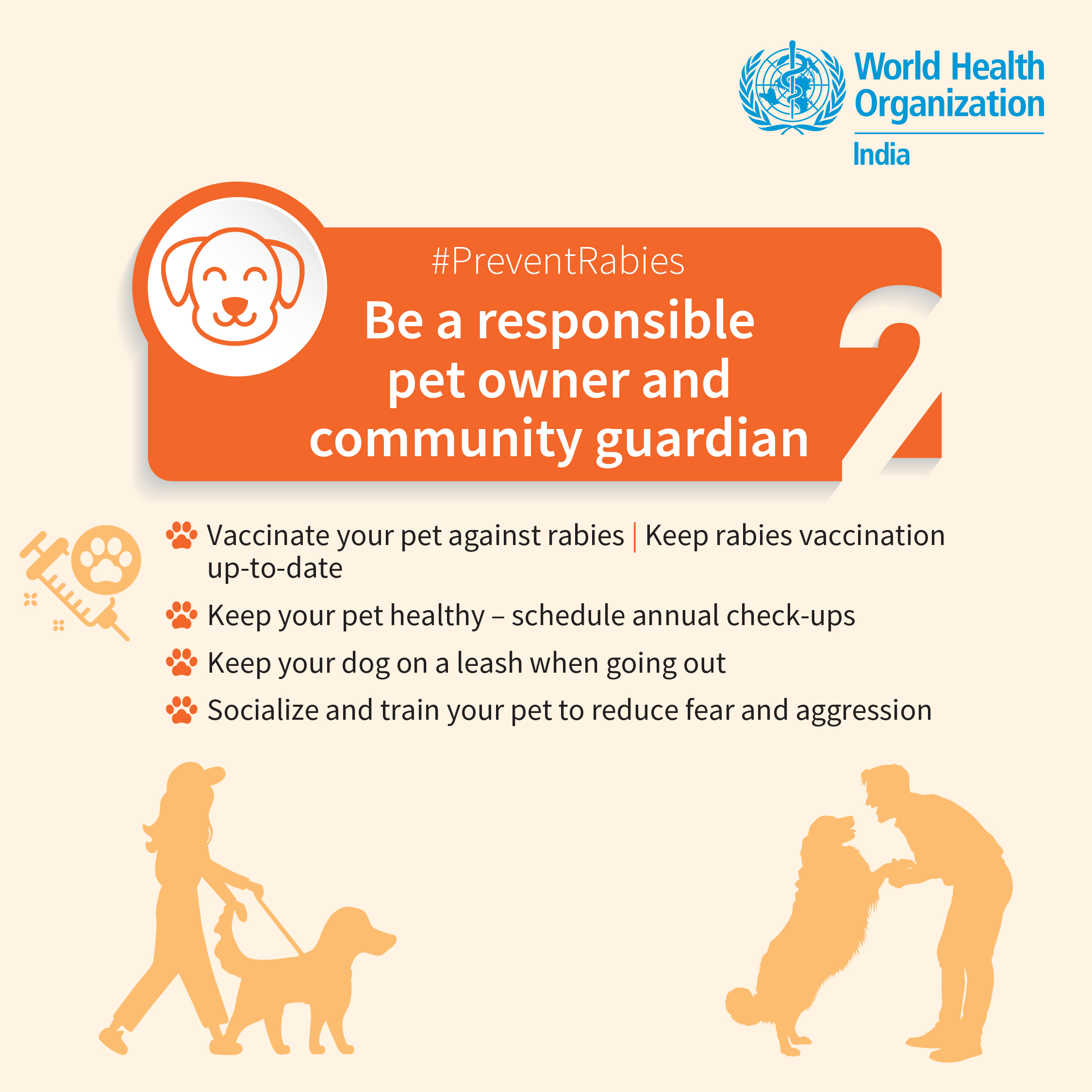
children under 15 years of age. Rabies is entirely preventable through timely
vaccination of dogs and prompt post-exposure care, and WHO, together with the
World Organization for Animal Health (WOAH), the Food and Agriculture
Organization (FAO), and the Global Alliance for Rabies Control, has set a
global target of zero human deaths from dog-mediated rabies by 2030.
According to Indian Council of Medical Research–National Institute of Epidemiology estimates published in 2024, 9.1 million animal bites occur in India annually, with over three-quarters of them caused by dogs. The study estimated that 5726 human rabies deaths occur each year, a substantial decline from the estimated 20 000 deaths annually two decades ago.
Technical links