
/59748.tmb-300v.png?sfvrsn=9885965b_2 "For the future - publication thumbnail")


What do young Cambodian mental health professionals think about the future of mental health care?
In Cambodia, access to mental health care remains limited. In a country with over 17 million people, there were only 130 psychiatrists and psychiatric nurses as of 2022. Beyond specialised professionals, the Ministry of Health has developed in-service training modules on mental health and substance abuse for physicians and nurses, training over 2,852 since 2020.
However, improving mental health goes beyond increasing the number of mental health professionals alone. With support from WHO and the WHO Foundation, Cambodia is the second country in the Western Pacific Region to implement the WHO Special Initiative for Mental Health (SIMH). The initiative aims to embed mental health into broader national policies, strengthen the health workforce, and expand access to services at the primary health care level.
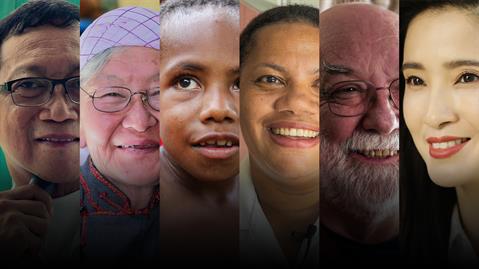
This photo story celebrates five mental health professionals – from counsellors to psychiatrists to policymakers – who are at the heart of Cambodia’s mental health transformation. They share what inspires their work and their hopes for the future.
Swipe through their stories below.
Dr Roza Pakhona in her office at the Department of Mental Health and Substance Abuse, Ministry of Health
Dr Roza Pakhona, Technical Officer at Department of Mental Health and Substance Abuse, Ministry of Health
“The main reason I chose to work in mental health is because I saw how few people were in this field in the country. When we have a physical illness, we usually know where to go. But when it’s our mental health, many of us don’t know who to turn to.
I remember when I was about six or seven. A distant relative of mine – he was a regular person, had a job, and lived a normal life. But one day, he started talking to himself, behaving in ways we didn’t understand.
People thought he was cursed, so the family took him to traditional healers in the village. He didn’t get better. It wasn’t until six months later that they finally realized he was struggling with a mental illness. They took him to the hospital.
After he received mental health support, he could talk and work normally just like anyone else. That was the first time I saw firsthand how mental health can affect people’s lives. It also became one of the many reasons I studied psychiatry.
I used to work as a doctor specializing in psychiatry. Now, as a Technical Officer, I help develop national policies and guidelines for mental health and substance use services.
One of the things I’m most proud of is seeing the change in some health centers where we’ve trained health workers and village health support group (VHSG) volunteers.
Before, when people had headaches, insomnia, or signs of mental distress, doctors would look for a physical cause, and they couldn’t find anything. Even when the doctors suspected it was mental health-related, they didn’t have the skills to diagnose the patients. But after our training, they can now assess the severity of someone’s mental condition, recommend treatment, or refer them to a specialist.
Still, we’ve only been able to do this in a few provinces. My vision is to scale this training across all 25 provinces in Cambodia. And right now, our medical schools only offer general psychiatry. I believe if we could make the curriculum more comprehensive – including specializations in child and adolescent mental health – it would make a real difference.”
Dr Tampa Keo in the hospital hallway at Khmer-Soviet Friendship Hospital
Dr Tampa Keo, Psychiatrist at the Child and Adolescent Unit, Khmer-Soviet Friendship Hospital
“Unlike adults, children fall asleep easily. So when they start having nightmares or night terrors – waking up in the middle of the night crying, screaming, terrified – oftentimes it means something is not right.
I’ve been working as a psychiatrist in the child and adolescent unit in this hospital for the past two years. I’ve seen how much a child’s mental health can affect every part of their life, especially their education. And if we don’t intervene and just let a 12- or 13-year-old give up on their dreams, that would be just cruel.
There’s one girl I remember clearly. She was diagnosed with trichotillomania, a hair pulling disorder. She pulled out her hair, body hair, and even her eyebrows when she was anxious or stressed.
When I first met her, she didn’t utter a single word. She wouldn’t even look up at anyone. The second time I saw her, she said one word: ‘Yes.’ Just that one word made me so happy.
In the sessions that followed, she slowly began to open up to me and the psychologist. We started working with her and provided counseling to better understand her situation.
The last time I saw her, I noticed her little eyebrows were starting to grow back – very short. But it filled my heart. She’s also gone back to school. That’s what matters to me. Whether she becomes an outstanding student or not is beyond our control. As long as she gets to go back to school, that’s enough for me. That’s what keeps me going.
What I hope to see more of in Cambodia is an increase in mental health professionals, especially psychiatric nurses and social workers. I want for us to be able to work in a full multidisciplinary team, like they do abroad. So when patients start to feel better, they don’t just get discharged; they’re supported in rejoining society. They can go back to school or work to support themselves as well as their families.”
Socheata Khorn at The Center for Trauma Care and Research Organization (CTRO)
Socheata Khorn, Project Assistant and Counsellor at The Center for Trauma Care and Research Organization (CTRO)
“The generations of our grandparents and parents went through long-term suffering during the civil war, which shaped their perspectives and the way they communicate. It affects parenting and family dynamics in many ways. One common example is when adolescents say they’re struggling, adults may unintentionally downplay their problems.
Most of my clients are adolescents, but there are parents too. They explained their difficulty in understanding their teenage children. They were trying to view life from their children’s perspectives and came for professional help.
Mental health professionals are crucial, but I believe the support needs to go beyond the counselling room. Everyone can learn basic skills to care for oneself from a young age, like regulating emotions and practicing mindfulness exercises. We may want to start from places like schools, which is exactly what we are doing.
The Ministry of Education, Youth and Sport and the Ministry of Health have developed a Psychological First Aid Curriculum, which can help teachers support students who are in distress.
Another thing I’m excited about regarding the Special Initiative for Mental Health is the development of the country’s first mental health counselling hotline. CTRO is proud to be part of these developments. We hope to continue contributing to mental health through our expertise and expand our impact by building the capacity of service providers like me.”
Channith Yeun in his counselling room at Royal University of Phnom Penh
Channith Yeun, Lecturer and School Counsellor at the Royal University of Phnom Penh
“'Men cry too.' That’s something I often say. Men cry. Women cry. The first thing anyone does when they come into this world is cry. That’s just human nature. Crying is not bad or good. It’s not a sign of weakness and seeking support doesn’t make you weak.
But when it comes to mental health, many are still afraid of being judged, labeled as weak or crazy. I always tell my students: don’t wait until you’re struggling or starting to lose control to reach out.
From my experience working in this field for eight years, I’ve noticed that both city and provincial students face similar challenges in their relationships, studies, and social pressure. However, students from rural areas often feel at a disadvantage compared to city peers, who tend to have greater access to resources and stronger skills in English language and digital technology. I remind them to focus on the positive.
You may feel your peers from the city are ahead. But don’t forget your own strength – studying while working and saving to support your family. That’s incredible. Be proud of yourself.
I ask students to reflect on what they’ve overcome: passing Grade 9 and Grade 12 national exams, university entrance tests, balancing part-time work with studying and doing chores.
You made it here on your own, even when others had more support. That’s something to celebrate.
Often they reply, 'Why didn’t I think of it that way?' It always makes me smile when they realize this.
I have high hopes for the Special Initiative for Mental Health. I believe it can raise awareness of mental health and help students know where to seek support. Seeing students smile as they go back to school, graduate, or land a good job – those moments remind me why I do this job.”
Dr Mayanuth Kheng at the Department of Mental Health and Substance Abuse, Ministry of Health
Dr Mayanuth Kheng, Psychiatrist at the National Pediatric Hospital
“My dad is a psychiatrist. Growing up, I’d hear him say, ‘Most problems come from poor communication.' That always stuck with me. I used to wonder. Why is it so hard for families to talk? Why do we keep everything inside until it gets too serious?
My passion led me to psychiatry. After medical school, I chose to specialise in this field and later received additional training in France, focusing on children and adolescents.
I work mostly in family therapy. What I’ve learned is, when one person is struggling, the whole family often plays a part.
I remember a case of a high school girl. A bright, hardworking and top student. But miscommunication with her mother led her to miss an important exam.
She fell into depression. Couldn’t sleep. Constant headaches. They went from doctor to doctor until they finally came in for mental health counselling. I invited the mother to join the sessions too. Once they started opening up to each other, things began to change. What I love about family therapy is that often we don’t need to use medicine – we can do counselling through open and clear communication within the family.
These days, I notice more parents, especially those living in the city and suburban areas, are starting to understand that any issues that a child has can be linked to mental health, not just physical ones. Yet, in rural areas, that kind of awareness is still limited.
That’s why I’m hopeful about the Special Initiative for Mental Health. I hope to see mental health services strengthened and expanded into communities and provinces. I’d love to see more psychiatrists placed in provinces, even just one per province. This way, parents don’t have to travel all the way to the capital for help. Early support makes a big difference – it can prevent a child’s struggles from growing into something much more serious.”